BREW GUIDE / Filter coffee
Pour-over coffee
Start with an even bloom and measured pours, then distinguish a slow pouring routine from a clogged final drawdown.
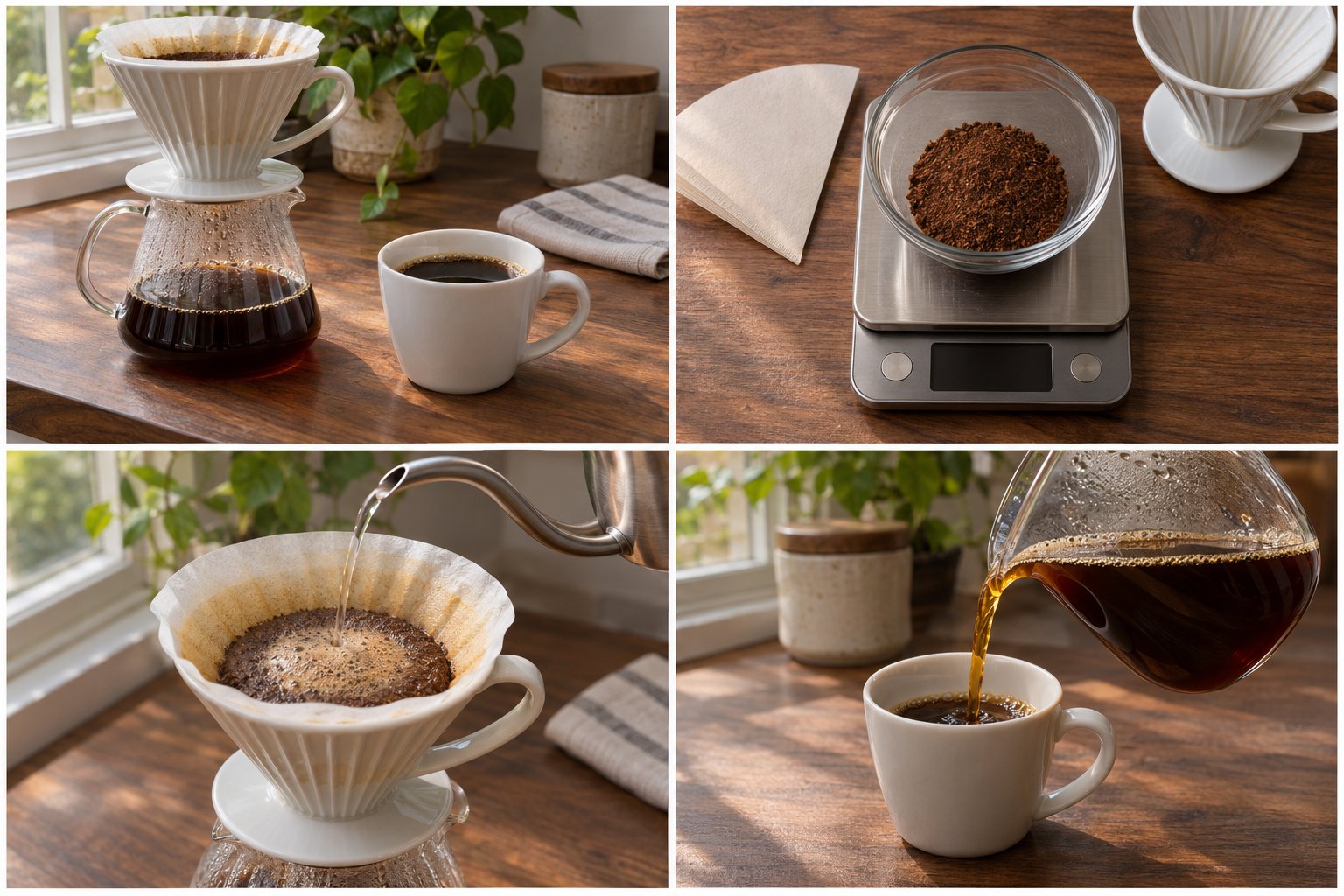
Equipment and measurements
Dripper, matching filter, carafe, grinder, scale, timer and pouring kettle.
Amounts marked as brewed espresso describe beverage weight, not dry grounds. Keep water, milk, ice and other additions as separate measurements; final volume varies with the method.
How to make it
- Rinse a fitted paper filter and discard the rinse water. Grind 15 g coffee, add it to the dripper and gently level the bed. Set the dripper on the carafe and tare the scale.
- Start the timer and pour water at roughly 92–94°C to a cumulative 45 g. Wet the whole bed and wait until about 30 seconds before the next pour.
- Pour steadily to a cumulative 140 g, then make another controlled pour to 240 g. These are running scale readings, not additional amounts for each stage.
- Let the water drain, remove the dripper and gently mix the carafe. Treat 2:30–3:30 as an observation window, not a pass mark, and taste as the cup cools.
What to adjust first
Slow drawdown with a dry, astringent finish: check fine particles and filter fit, then try a slightly coarser grind. Fast flow and a weak cup: check wetting and dose before grinding finer. Keep water weight fixed while comparing.
A flat bed is a clue, not a tasting result
A tidy coffee bed can help you compare pouring habits, but it does not prove the cup is balanced. Do not add extra swirling merely to make the surface photogenic. Use drainage observations together with taste.
Try this comparison next time
Keep 15 g coffee and 240 g water fixed. Change only how evenly you cover the bed, then compare cratering and the final drawdown. Leave a balanced cup alone even if its time differs from the suggested window.
What to write down
Note the filter, grind setting, last-pour time, finish time and whether the aftertaste feels drying. Grinder numbers only describe your own grinder.
Keep learning
Coffee basics · Flavour troubleshooting
Your notes for this cup
Record settings, flavour and one change for next time. Notes stay in this browser; they are not uploaded or synced. Clearing site data removes them.