BREW GUIDE / Stovetop
Turkish coffee
Heat coffee gently in a cezve and allow fine grounds to settle instead of filtering the cup.
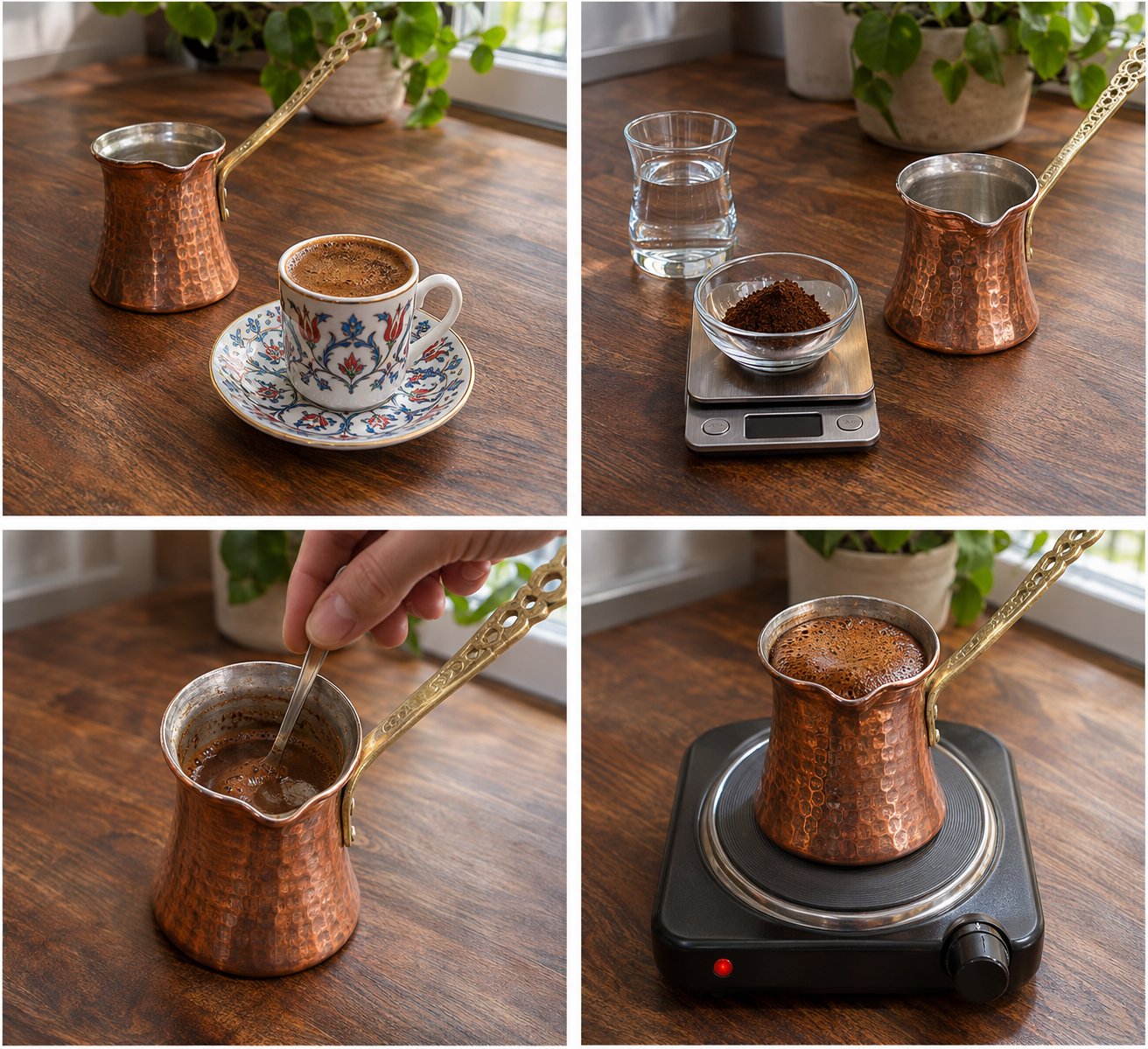
Equipment and measurements
Cezve, compatible low electric heat source, scale, small cup and spoon.
Amounts marked as brewed espresso describe beverage weight, not dry grounds. Keep water, milk, ice and other additions as separate measurements; final volume varies with the method.
How to make it
- Measure 7 g Turkish-style finely ground coffee and 70 g drinking water into a suitable small pot with room for foam. Ordinary pour-over grind is not an equivalent substitute.
- Mix the coffee and water before heating; add a little sugar now if desired. Starting unsweetened is useful when learning the basic flavour.
- Heat gently while watching fine foam gather. Remove the pot when the foam rises but before it overflows; stay with it and avoid a vigorous rolling boil.
- Pour slowly into a small cup and allow grounds to settle. Sip the upper liquid and leave the thick sediment rather than trying to drink it all.
What to adjust first
Grit from the first sip: check fineness and settling. Scorched bitterness: review heat and time near boiling. A small foam layer alone does not prove a poor-tasting cup.
Do not chase foam by repeated vigorous boiling
Traditional techniques differ. This beginner route observes one foam rise and removes the pot. Foam depends on coffee and handling; repeated rolling boils are not a mandatory quality test.
Try this comparison next time
Keep the pot, coffee, water and heater setting fixed. Compare your pouring timing while allowing the fine grounds to settle before tasting either version.
What to write down
Record grind type, sugar and the foam state at removal. Treat sediment as grounds to leave behind, and allow the drink to cool rather than testing a scalding cup with your tongue.
Keep learning
Coffee basics · Flavour troubleshooting
Your notes for this cup
Record settings, flavour and one change for next time. Notes stay in this browser; they are not uploaded or synced. Clearing site data removes them.